

As a new parent, you likely have plenty of questions about pacifiers and teeth.
As an experienced dentist, a mom, and the inventor of a patented pacifier toothbrush, I’m here to answer all of your questions about pacifiers and teeth! I’ve navigated the benefits and challenges of pacifier use firsthand.
In this post, we’ll explore how pacifiers can affect your baby’s teeth, when to start and stop using them, and how to protect your child’s developing smile. I’ll also share a unique solution I created for my own daughter: a pacifier that gently supports oral health from day one.
Pacifier use is normal and beneficial in infancy. It helps soothe babies, supports self-regulation, and may even reduce the risk of SIDS during the first year.
Prolonged pacifier use (especially beyond age 2–3) may lead to bite issues such as open bite, overbite, or changes in the shape of the jaw and palate.
Orthodontic pacifiers, which have a flatter bottom and rounded top, are designed to reduce pressure on developing mouths and may minimize dental alignment issues.
Pacifiers dipped in sugary substances like honey should be avoided! This can contribute to early dental problems like infant caries, especially if paired with poor oral hygiene.
Using pacifiers for teething relief is okay, especially if the design includes features that gently massage gums—like the Calm and Clean Toothbrush Pacifier, which was created by a dentist mom to support both soothing and oral hygiene.
Transitioning away from pacifiers around 12–24 months can help prevent dental misalignment and reduce dependence, especially when paired with fun, gentle brushing tools and positive routines.
If you notice changes in your child’s bite or tooth position, talk to a pediatric dentist immediately. Early intervention can often prevent the need for future orthodontic care.
This os one of the main concerns I hear from parents about pacifiers and teeth as a dentist. The answer isn’t simple! It greatly depends on how long and how often your baby uses the pacifier.
Pacifier use in infancy is generally very safe and unlikely to cause permanent changes to tooth alignment or bite. In fact, many children use pacifiers for comfort in their first year without any dental issues at all.
However, if pacifier use continues past age 2 or 3, or if the child sucks very strongly or frequently, it can start to affect the way their teeth and jaws develop.
Moderation, timing, and pacifier design all matter. If you’re concerned about your baby’s dental health, a quick checkup with a pediatric dentist can give you peace of mind!
What dental issues can pacifier use cause? How will you know if your baby is experiencing dental issues due to their pacifier? Let me explain in detail which dental alignment problems you need to be aware of when it comes to pacifiers and teeth!
The 3 most common dental alignment issues caused by pacifiers are:
What it is:
An open bite occurs when the upper and lower front teeth don’t touch when your child closes their mouth. Instead, there’s a visible gap between the top and bottom front teeth, even when the back teeth are in contact.
Why it happens:
Long-term pacifier use (or thumb sucking) can prevent the front teeth from erupting fully or can push them outward. The repeated sucking motion may also change how the tongue rests or moves during speech and swallowing, which can reinforce the gap.
How parents might notice it:
What it is:
An overbite occurs when the upper front teeth stick out much farther than the lower teeth. While a slight overbite is normal, a significant overbite may affect the child’s bite alignment and facial structure.
Why it happens:
Prolonged pacifier use can put pressure on the upper teeth and push them forward. It may also contribute to underdevelopment of the lower jaw if it alters muscle use or jaw posture over time.
How parents might notice it:
What it is:
This refers to structural changes in the mouth, such as a narrow upper jaw, high-arched palate, or asymmetrical facial development, which can occur when the pressure from sucking alters bone growth over time.
Why it happens:
A baby’s jaw and palate are soft and moldable in the first few years of life. Constant sucking—especially from a pacifier that doesn’t distribute pressure evenly—can change how these structures grow. A narrow palate may also contribute to crowded teeth or breathing issues later on.
How parents might notice it:
The good news is that many of these changes are reversible if pacifier use stops before the age of 3. Using a well-designed, orthodontic-style pacifier and weaning gradually by the toddler years can help reduce these risks significantly.
While pacifiers can be soothing for babies, dipping pacifiers in honey, syrup, or other sugary substances is a common way infants get baby bottle tooth decay, also known as infant caries or infant cavities.
While it may soothe a distressed, teething baby to dip their pacifier in a tasty substance like honey, this exposes baby teeth to sugar, feeding bacteria that produce acid and damage enamel.
Combined with poor oral hygiene, this can lead to painful cavities in baby teeth.
To protect your child’s smile, avoid adding sugar to pacifiers and always clean them regularly.
Get more dentist advice about identifying and preventing cavities in baby teeth.
Pacifiers come in different shapes, and research shows that orthodontic-style pacifiers with a flat bottom and rounded top put less pressure on your baby’s teeth and palate than pacifiers with a rounded bulb.
For example, one study that reviewed pacifier use and dental health found that anatomical or orthodontic pacifiers were linked to fewer bite issues, such as open bite and overbite, compared to conventional round pacifiers.
In another study comparing pacifier designs, researchers found that babies who used round pacifiers had a higher risk of developing alignment issues than those who used orthodontic-style pacifiers.
A third study used a digital simulation to analyze how different pacifier shapes affected tooth pressure. It showed that round pacifiers created more stress on the teeth and jaw, while orthodontic pacifiers spread the pressure more evenly.
Yes, it’s perfectly okay to use a pacifier to help soothe teething pain, especially when it’s used mindfully and in moderation.
In fact, some pacifiers, like the Calm and Clean, are specially designed for teething. They feature soft bristles or textured surfaces that massage the gums while your baby sucks, providing extra relief AND teaching your baby important early dental hygiene habits.
As. dentist, I recommend beginning the process of weaning your baby off the pacifier by around age 2, and stopping daily use ideally no later than age 3.
Trust your instincts! If something doesn’t look right with your baby’s teeth or bite, a quick dental check can bring peace of mind—and early action can make a big difference in long-term oral health.
A pediatric dentist can evaluate your baby’s teeth, bite, and jaw development. They’ll let you know if any changes are temporary, need monitoring, or require early intervention. In many cases, early dental shifts can correct themselves once the pacifier habit stops—especially if it ends before age 3.
If your dentist recommends it, begin reducing pacifier time gradually. Start with limiting it to naps and bedtime, and offer other soothing options (like a teether or soft toy) during the day.
Here are some gentle, parent-tested tips to help your baby transition away from the pacifier—whether you’re starting early or easing out of a long-term habit.
Begin by limiting pacifier use to specific times, like naps or bedtime. Removing it during play or awake time helps break the all-day habit gently, without distress.
Swap out a traditional pacifier for something like the Calm and Clean, which offers familiar comfort but begins to shift the experience. Its soft bristles help introduce brushing in a soothing, non-intimidating way.
Exchange the pacifier with other calming objects or routines. Try introducing a “lovey” plush toy, a teething toy, gentle music, or extra snuggles. Sometimes it’s the ritual of comfort not just the pacifier that babies seek.
Avoid starting the weaning process during major changes like sleep regressions, illness, travel, or big developmental leaps. Choose a calm, consistent period to make the transition smoother.
Celebrate small wins with encouragement. For toddlers, you can create a reward chart or “goodbye pacifier” ritual (like leaving it for the “Pacifier Fairy”) to make the transition feel exciting rather than like a loss.
Once you’ve set boundaries, stick with them, but don’t worry if it takes a little time. Every child is different. Stay calm, patient, and reassuring. A little empathy goes a long way during this emotional transition.
If your baby still needs the comfort of sucking but you want to start transitioning away from your orthodontic pacifier, the Calm and Clean is a dentist-approved way to help baby transition away from passive soothing to active oral care.
I designed the Calm and Clean Training Toothbrush & Pacifier Teether to introduce the feeling of brushing with soft, soothing bristles at the base of an orthodontic-style pacifier. It’s an amazing tool to massage sore gums during teething, too!
By occasionally replacing your favorite pacifier with the Calm and Clean, you can shift your baby’s focus from pure soothing to early brushing, setting the stage for healthy oral care habits. This will gradually reduce reliance until your baby is ready to let go of the pacifier altogether—with less stress and more healthy smiles!
Learn more about the science behind Calm and Clean and purchase yours now.
HINT: Calm and Clean also makes a wonderful baby shower gift that’s essential for any new or experienced mom!
These pages contain information for general infant and toddler oral health. They do not provide medical advice. Every mouth is different, so please discuss with your dentist or doctor before you make any changes to your child’s dental hygiene routine.
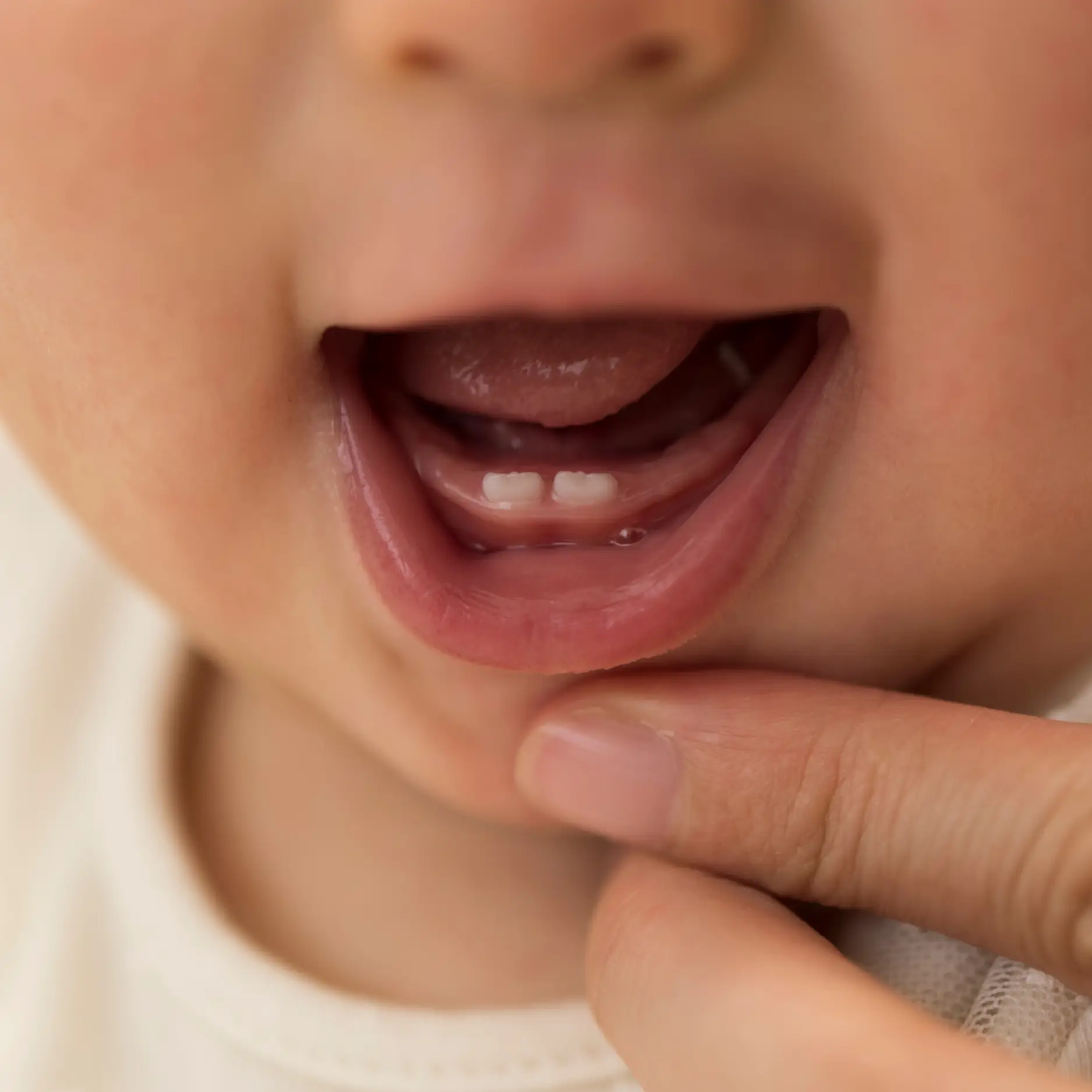
Want to avoid the unnecessary pain and stress of infant and toddler cavities? Get oral health advice from a dentist!