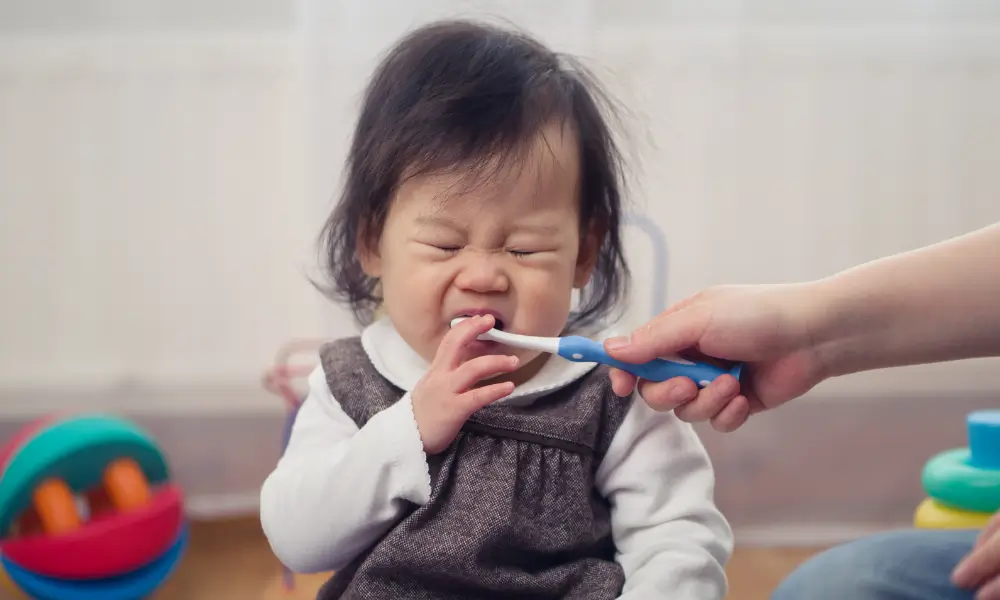
Learn how to brush baby teeth in 7 steps, even if your child hates it!
If you’ve ever tried to get a toothbrush or finger brush past clamped lips, dodged baby bites, or given up because the screaming was just too much, you are not alone. Many babies don’t enjoy brushing their teeth until a regular oral health routine is established.
Let’s walk through everything you need to know about brushing baby teeth effectively to prevent infant cavities , how to make it easier, and how to work around common challenges.
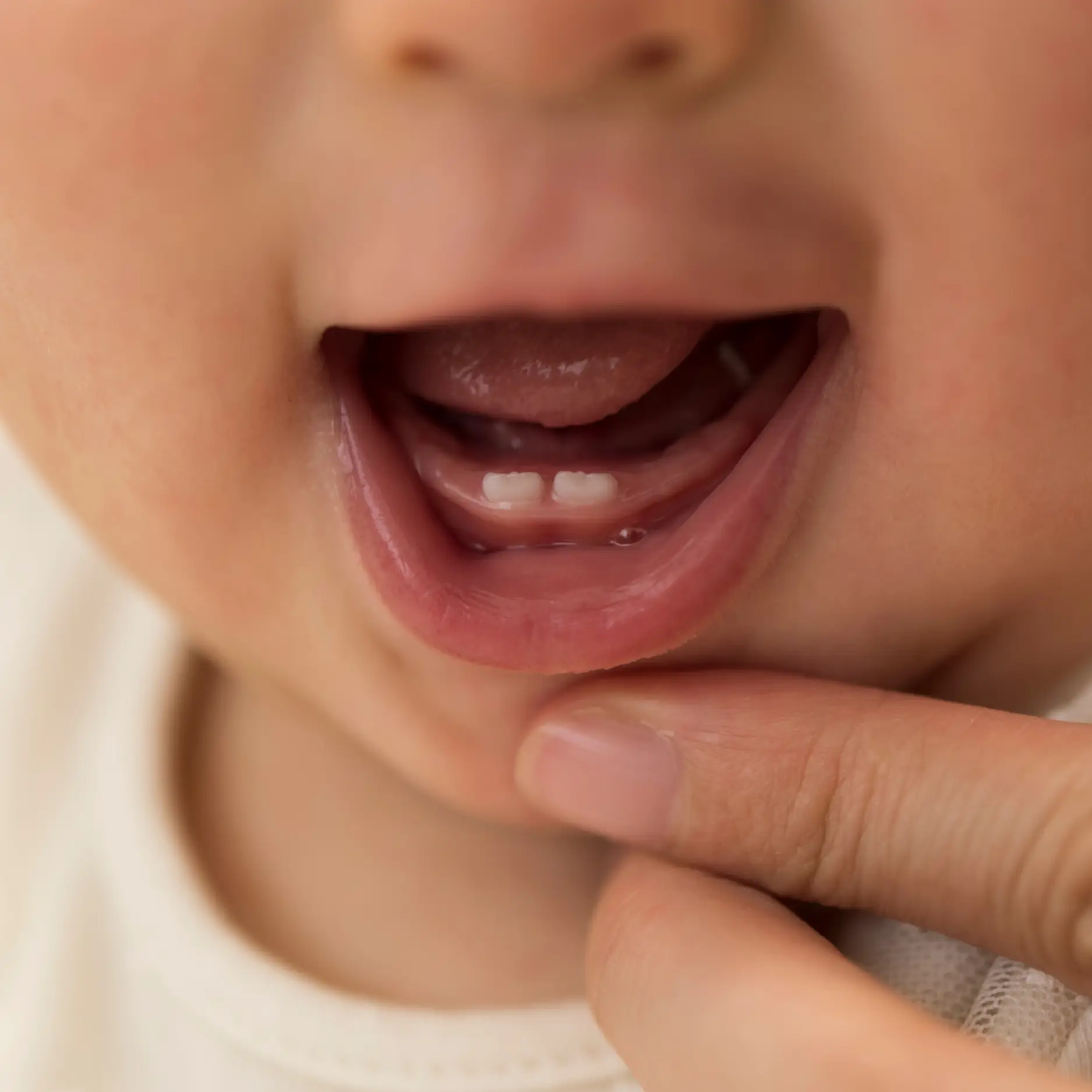
You should start brushing your baby’s teeth as soon as the first tooth appears—usually around 6 months of age.
Even though baby teeth are temporary, they play a vital role in speech development, chewing, and holding space for adult teeth. Starting early not only helps prevent cavities but also gets your baby used to the brushing routine, making it easier to maintain good habits as they grow.
Instead of using an infant toothbrush from the start, get your baby used to the sensation of brushing with a transitional teether that has bristles but a more familiar shape.
Calm and Clean Pacifier Toothbrush is an orthodontic pacifier designed by a dentist with soothing, soft bristles at the base. It’s perfect for babies 3-12 months who are adjusting to the feel of brushing teeth. Especially if they resist finger brushes.
It’s an easy way to keep emerging baby teeth clean and prevent baby bottle tooth decay while providing some much-needed teething relief!
Slowly start to introduce an infant training toothbrush. I suggest one that’s shaped like a familiar object, like a teether. Treat it exactly like a teething toy at first with no pressure to actually “brush”. This builds familiarity and lessens any negative “what is that thing!?” feelings baby might have.
Make dental care part of story time with fun picture books about brushing teeth. This introduces brushing in a relatable way. Plus, kids love seeing characters they recognize brushing!
Blippi: Brush, Brush, Brush Your Teeth
Sesame Street Ready, Set, Brush
Once your baby is used to the training toothbrush, start to get into the habit of using it once a day, ideally at night, and slowly build up to twice daily.
I suggest using a cute song to punctuate your routine! This helps baby recognize that it’s time to brush and makes it a fun activity they can look forward to.
(Tune: “Row, Row, Row Your Boat”)
Brush, brush, brush your teeth, gently round and round,
Up and down and all around, clean them without a sound.
Front ones, back ones, don’t forget the side,
Twice a day and you’ll be proud of your smile wide and bright!
EXTRA TIP: You can still use Calm and Clean or a finger brush to actually clean baby’s teeth during this transition, so you don’t need to worry about infant cavities. The goal is to build a sustainable routine!
Encourage your little one to “brush” on their own. Then help finish the job. Letting your child take the lead—then stepping in to help—gives them a sense of control while still ensuring their teeth are cleaned properly.
I suggest making this very obvious by taking “turns”. First, baby gets a turn. Then, parent gets a turn. This can make it feel more fair and less invasive when you brush for them.
Choose a soft-bristled infant toothbrush and use a smear of fluoride toothpaste—about half the size of a pea.
Brush the front, back, and chewing surfaces of every tooth, gently moving the brush in small circles.
Lift your baby’s top lip to reach the gum line and make sure you’re cleaning all the way up to where the teeth meet the gums.
Aim for about two minutes of brushing. If that’s too long for your little one, even 30–60 seconds twice a day helps!
Encourage your child to spit out the toothpaste but don’t rinse. This leaves a bit of fluoride on their teeth to help protect their enamel.
Clap, cheer, high five, or give a sticker to show your child how awesome this new oral health routine can feel! Positive reinforcement works wonders with babies and toddlers, especially if they are still feeling nervous about brushing.
Does your baby squirm, scream, clamp their mouth shut, or turn into slippery little alligator the second you come near them with a toothbrush? Maybe you’ve tried a silicone finger brush and gotten bitten. Or you bought a cute training toothbrush and your baby flung it across the room. Learning how to brush baby teeth is even harder when your child hates to brush!
Avoid brushing when your baby is overtired or hungry, since they’re much more likely to resist if they are cranky! Try brushing after a warm bath or when your baby is already in their bedtime routine when they’re more likely to be calm and cooperative.
When my daughter, Ashima, was an infant she refused to take her beloved pacifier out of her mouth. Every time I would try to use a finger brush it ended in struggling, tears, and stress for us both. Traditional infant dental health tools like the finger toothbrush just didn’t work for our family. Learning how to brush baby teeth isn’t a walk in the park even for a dentist!
I invented the Calm and Clean to make life a little easier for parents wondering how to brush baby teeth. It combines the soothing comfort or an orthodontic pacifier with soft bristles that clean baby teeth to help kiddos avoid infant cavities I’ve seen all too often as a dentist. Learn more here!
Stay positive, even if learning how to brush baby teeth doesn’t go perfectly. Avoid forcing it. This can create negative associations that make future brushing sessions even more difficult. This is a marathon, not a sprint.
If your baby has a big brother or sister, let them be a brushing role model. Kids love copying older siblings!
Try to brush teeth around the same time each day EVERY day. You may have more success learning to brush baby teeth if you attach brushing to an existing routine, like your morning and bedtime routines.
You can start out small and build up to actually cleaning their teeth! Even a few seconds of brushing at first helps set long-term habits.
As a mom, I completely understand how challenging it can be to get our children to practice dental hygiene. However, as a dentist, I’ve seen far too many cases of infant caries and early childhood cavities that require fillings or even tooth extraction. Failing to introduce your child to healthy brushing habits can have a lasting impact on their teeth, causing pain, infection, and teeth spacing issues that make orthodontic intervention more likely in their teens.
If you have a child that resists teeth brushing (like mine did when she was an infant), please consider the Calm and Clean pacifier toothbrush as a solution! Learn more here or purchase yours now.
Brushing doesn’t have to be a struggle. The main goal with early toothbrushing is to make oral health a familiar part of your baby’s routine. With consistency, creativity, and a little playful fun, it can become an enjoyable (or at least not completely miserable!) part of daily life.
These pages contain information for general infant and toddler oral health. They do not provide medical advice. Every mouth is different, so please discuss with your dentist or doctor before you make any changes to your child’s dental hygiene routine.
Want to avoid the unnecessary pain and stress of infant and toddler cavities? Get oral health advice from a dentist!